9.1 Introduction to American Courts
Wesley B. Maier, PhD; Kadence Maier; William M. "Bill" Overby, MCJ; and Terry D. Edwards
The legal and court practices in Colonial America were firmly rooted in English common law, yet the exigencies of the New World demanded notable adaptations. While Colonial America endeavored to adhere to the principles of English common law, the distinct needs and challenges of the burgeoning colonies compelled a departure from strict emulation (Friedman, 2005). The great geographical distance from the English crown afforded colonial courts a certain flexibility in legal proceedings, allowing them to adapt to the specific needs and challenges of their communities. Consequently, the legal framework underwent substantial modification to better suit the unique circumstances of Colonial America, reflecting the pragmatic adjustments essential to address the evolving demands of society in the New World.
Figure 9.3
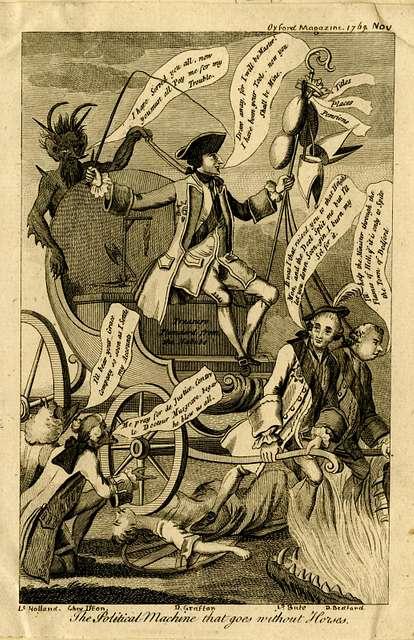
Colonial courts operated with a significant degree of local autonomy, and each colony developed its own unique court structure and system, which evolved over time. Puritan values played a pivotal role in shaping legal practices in the colonies, particularly in New England. Judges often doubled as religious figures and politicians (Friedman, 2005), further intertwining legal codes with religious principles, perpetuating outcomes for certain offenses as crimes against both civil and religious authorities. At the local level, petty crimes were typically presided over by a single magistrate or justice of the peace. County courts, responsible for handling more serious crime and a broad spectrum of cases, including civil disputes, criminal offenses, and matters related to local governance, were essential. As caseloads increased, colonies implemented the “courts of appeals,” often composed of the governor and his council. In rare instances, the unsuccessful party of a case could appeal to the justice system in England.
The scarcity of legal professionals in the colonies was a prevalent reality, leading to a predominantly layman presence among court actors. This scarcity necessitated a simpler legal system due to the inherent lack of legal expertise. Given the limited availability of attorneys and the financial constraints preventing many from securing legal representation, individuals frequently found themselves defending their cases in court. In some instances, residents possessing some legal knowledge would step into the role of amateur attorneys, although it was not uncommon for prosecutors to be witnesses attempting to support their case (Friedman, 2005). Juries, typically selected from the neighborhood where the crime occurred, played a pivotal role in both criminal and civil trials. They actively participated in determining the facts of a case and deciding the appropriate punishment.
Figure 9.4
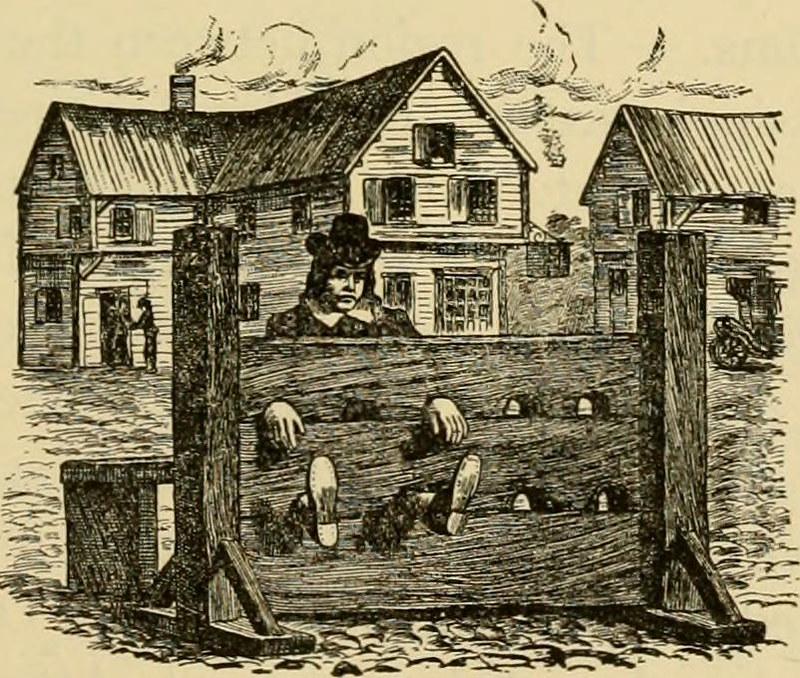
Punishments in Colonial America were often severe, designed not only to penalize the offender but also to act as a deterrent (see Curious Punishments of Colonial Days). Forms of punishment included fines, public humiliation, corporal punishment, and, in extreme cases, capital punishment. Stocks, whipping posts, and pillories were fixtures in colonial towns for executing physical punishments, as illustrated in Figure 8.4 above. Unfortunately, these court practices were often marked by the mistreatment of Indigenous peoples, with legal proceedings frequently biased against Native Americans in disputes over land, resources, and cultural differences.
The courts in Colonial America underwent swift evolution, and by the end of the Revolutionary War, concerns about tyranny and the concentration of power in the government arose (Friedman, 2005). In response, President George Washington signed the Judiciary Act of 1789, establishing the federal court system while allowing each state to maintain its unique court system. Despite their significant influence today, the early years of the U.S. Supreme Court saw limited power, as evidenced by the resignation of the first Chief Justice after only a few months to become the governor of New York. In the aftermath of the Revolutionary War, a notable shift occurred, marking a decrease in the governing power of state courts. This transformation involved the transfer of considerable power and authority from the state courts to the state legislative branch.
Figure 9.5
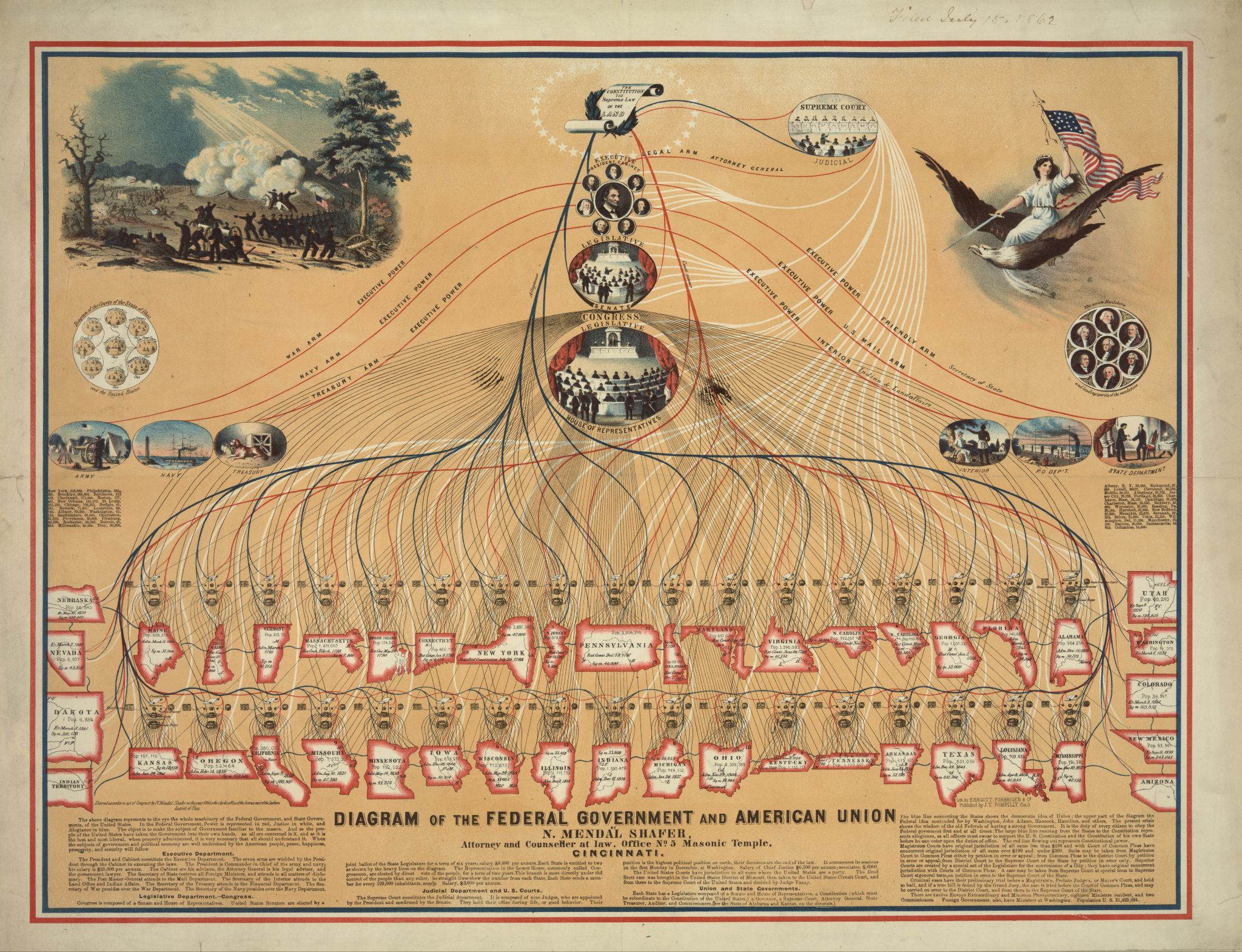
Profound transformations reshaped the American court system following the Civil War and the dawn of the Industrial Revolution, leaving an indelible mark on the structure, jurisdiction, and guiding legal principles of American courts. Concurrently, the post-Civil War era marked a distinctive shift toward heightened federal authority, exemplified by the expansive growth of the federal court system and an increased emphasis on constitutional interpretations. The abolition of slavery and the influx of European migrants in the 1870s fueled the American Industrial Revolution, instigating significant economic and social changes. As newly emancipated Black individuals and European immigrants flocked to urban centers for employment in burgeoning factories, the rapidly expanding U.S. population necessitated adaptations in the court systems. This led to the establishment of specialized courts to address emerging challenges in crucial areas such as labor, business, and corporations. Simultaneously, in 1891, Congress solidified these changes by enacting the Judiciary Act, which established nine courts of appeals, aligning with each judicial circuit.
Figure 9.6
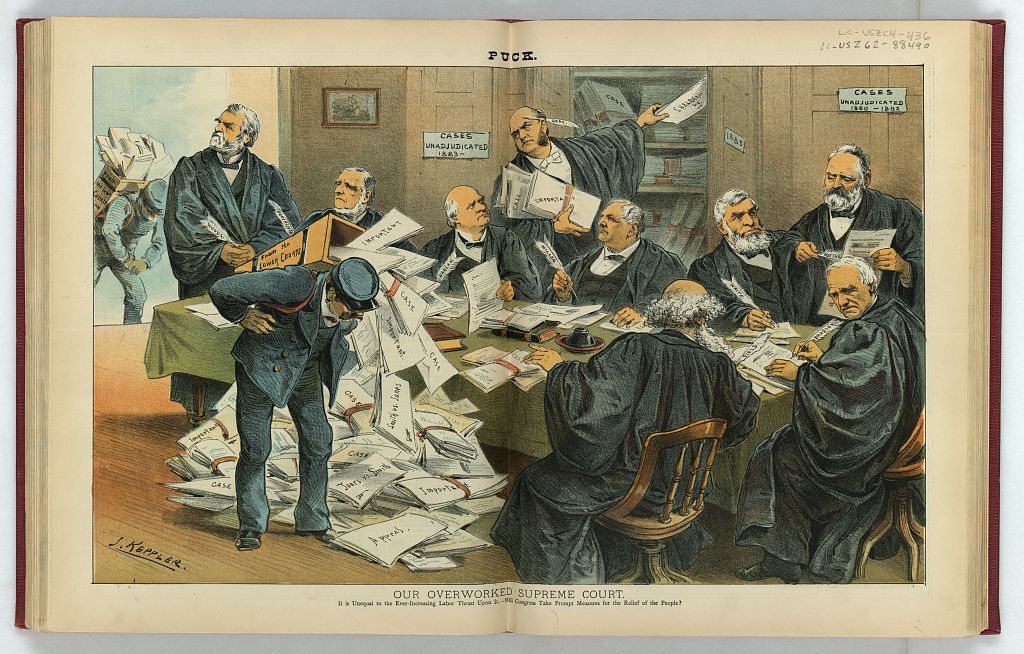
However, the response to the growing state populations resulted in poorly organized court structures. States adapted reactively, hastily establishing city courts and specialty courts, resulting in overlapping jurisdictions with consequential implications (Friedman, 2005). This chaotic expansion across various state courts resulted in a diverse array of state court structures, fostering confusion that persists as an issue in contemporary society.
9.1.1 Adversarial System
The U.S. legal system employs an adversarial model as its approach to seek fairness and truth. In the adversarial system, two opposing parties engage in legal dispute before an impartial judge or jury. Notably, the U.S. criminal system adheres to the presumption of innocence for the accused, placing the burden on the prosecutor to demonstrate the defendant’s guilt beyond a reasonable doubt . Both defendants and prosecutors are afforded the opportunity to cross-examine witnesses, fostering a dynamic process of evidence examination and argument. This stands in contrast to legal systems in numerous other countries that do not follow the adversarial system. In these systems, a singular government entity typically conducts criminal investigations and establishes guilt.
While courts may evoke the imagery of a traditional courtroom trial, the predominant method in the contemporary legal landscape is plea bargaining, which concludes nearly 95% of all criminal cases in the U.S. (Bibas, 2006). As a result, plea negotiation assumes a pivotal role in the court system. Even though these negotiations typically transpire privately between the defense and prosecution, they constitute an integral aspect of an adversarial process. This is underscored by the presence of an impartial judge, who, serving as a neutral arbitrator, retains the discretion to either accept or reject the negotiated agreement mutually agreed upon by the two opposing parties.
Review Checks